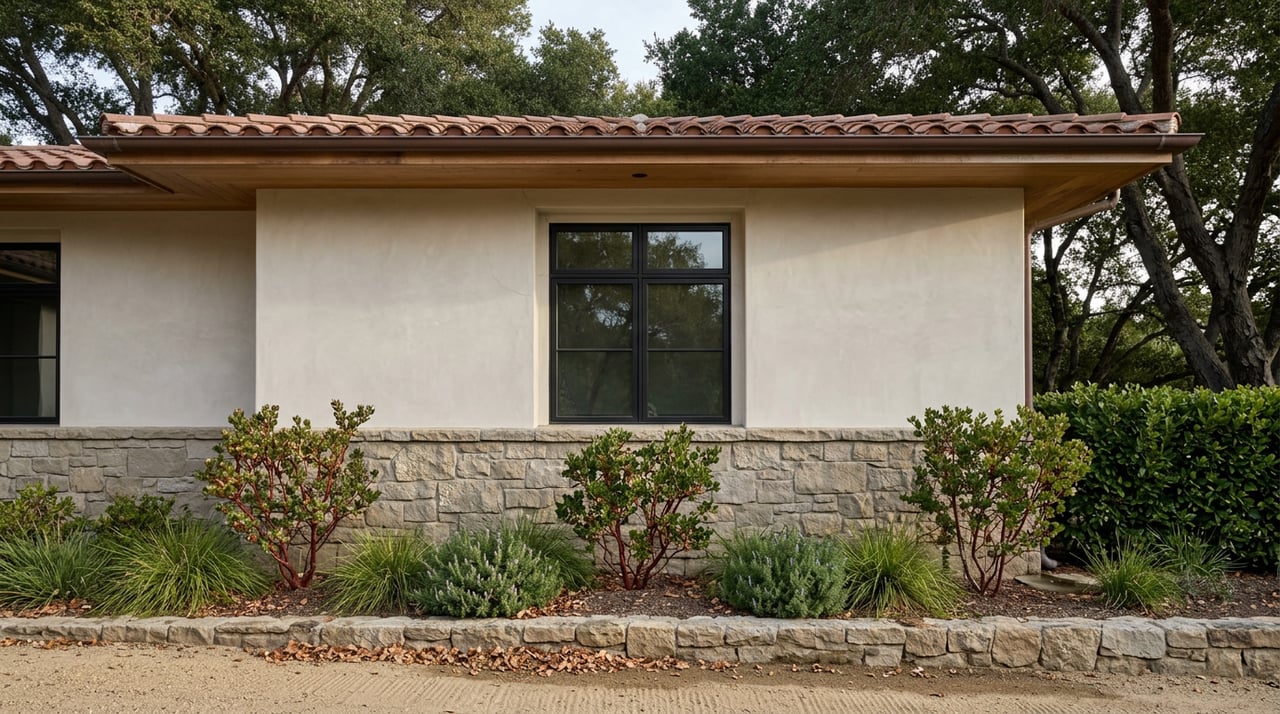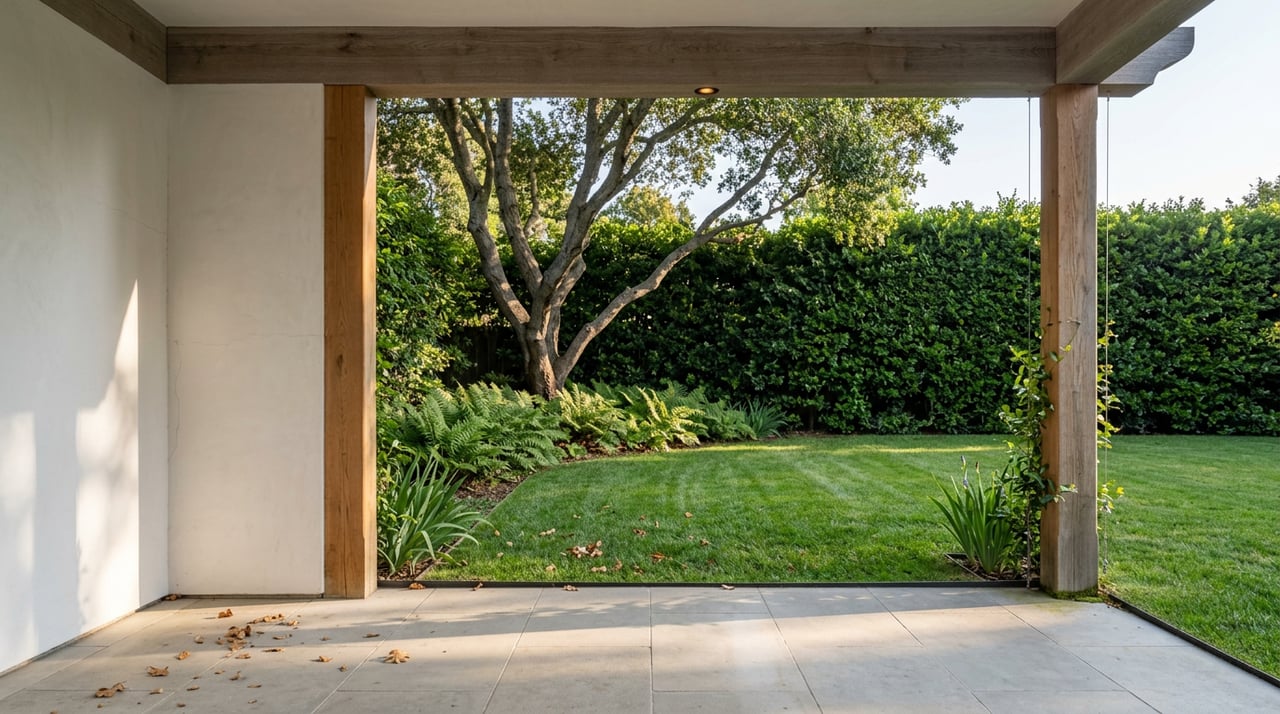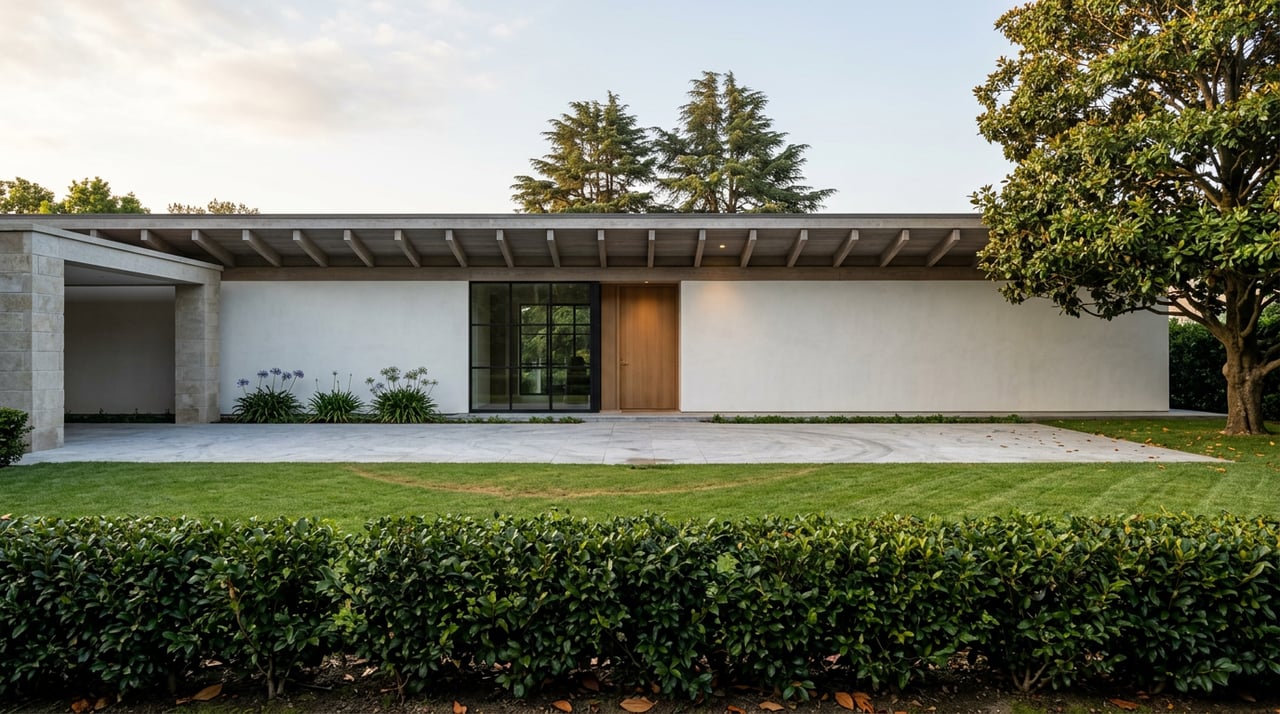
A few weeks. That's how long it took a flat, 1.157-acre lot on Stockbridge Avenue to gain three million dollars in value without a single wall going up.
The property sold in November 2025 for $9.5 million after drawing fourteen offers, a fierce contest for a four-bedroom, four-bath French Country home that listing agent Gina Haggarty of Compass said had almost no value of its own. "Really, it's land value," she told the SF Standard at the time. "The home had no significant value to it." It was, by every practical measure, a $9.5 million teardown.
Then, in January 2026, the same lot reappeared on the market at $12,888,000. No construction had happened. What changed was paperwork: the sellers commissioned architectural plans for a 14,000-square-foot estate and resolved a legal dispute tied to a divorce that had spooked earlier bidders. Listing agent John Pang argued the cleared title and finished drawings justified the jump. DeLeon Realty's Ken DeLeon, who had represented a developer bidding on the same property in November, called the new number "grossly unwarranted" and pegged the property's real value closer to $10 to $11 million.
Both agents were looking at the same acre. They disagreed by nearly $3 million on what it was worth. That gap is the story, and it tells you something every Atherton buyer needs to understand before they fall in love with a listing photo: the price is rarely about the house. It's about how much of that acre you're actually allowed to build on, and how much certainty you have about it.
The acre you're buying isn't the acre you think
Atherton's zoning code sets a one-acre minimum lot size in its R-1A district, the town's largest residential zone. That number gets repeated in every listing and every conversation about the town, and it tends to imply a kind of interchangeability, as if one Atherton acre is roughly like the next.
It isn't. Three separate constraints determine how much of that acre can actually hold a house, and they stack on top of each other:
- Setbacks. R-1A parcels carry substantial setbacks on every side, with published figures for front, side, and rear yards running anywhere from roughly 30 to 60 feet depending on which section of town and which zoning summary you're reading. Even at the lower end of that range, setbacks remove a meaningful share of a one-acre parcel before anyone has drawn a wall.
- Floor area ratio. The town's development standards cap the main residence at roughly 18 percent of lot area. On a one-acre lot, that works out to a footprint in the neighborhood of 7,800 square feet, before you account for setbacks eating into the usable shape of that footprint.
- Heritage tree protection. Atherton's municipal code defines a heritage tree as any native oak of 48 inches or more in trunk circumference, measured at 54 inches above grade, located anywhere on the parcel, plus other species of the same size located outside the buildable area. The ordinance doesn't just protect the tree. It protects a Tree Protection Zone around the trunk where no grading, trenching, or construction is allowed, and that zone can extend onto a neighboring property.
Two one-acre lots can differ enormously depending on how these three rules intersect with a parcel's actual shape and tree cover. A flat, cleared, rectangular acre with no heritage oaks gives an architect a clean canvas. A wooded, irregular acre with a cluster of protected oaks near the center can force the buildable footprint to shift, shrink, or split around them. Same acreage on paper. Very different product on the ground.
That's what makes Stockbridge such a useful case. Haggarty described the lot as slightly larger than the typical "Atherton acre," which itself runs just under a true acre, and flat, with the buyer pool split between professional developers and people hoping to build a dream home on the site. Flat and clean is exactly the profile that maximizes what those three constraints will allow you to build. That's a large part of why fourteen offers showed up for a teardown.
What that markup was actually pricing
The disagreement between DeLeon and Pang wasn't really about the lot. It was about what a finished set of plans and a resolved title are worth before a shovel touches the ground.
DeLeon told the SF Standard that architectural plans in Atherton can be worth $250,000 to $500,000, reflecting the design and entitlement work already completed. That's a real number, but it's a fraction of the $3 million gap between the November sale and the January relist.
The rest of that gap is about risk removal. The Stockbridge house had been an asset in a divorce dispute between its former occupants, according to Pang, and that uncertainty had scared off some of the higher bidders in the original round. The new owner hired two attorneys to untangle the legal issues before relisting. Reporting on the relisted property put the planning and permitting process still ahead of a buyer at one to three years, on top of whatever came before closing. Buying a lot where the legal work and the design are already done is a different product than buying a lot where you're starting from zero, even if the dirt underneath is identical.
Whether that's worth $3 million is a judgment call, and reasonable, well-informed agents can land in different places on it, as DeLeon and Pang did. But the disagreement itself is instructive. It means the sale price of an Atherton lot is doing three jobs at once: pricing the land, pricing the entitlement work already completed, and pricing the certainty that the legal path is clear. A buyer who only compares square footage and lot size across listings is comparing none of those things.
The pattern isn't a one-off
Stockbridge wasn't an isolated event. A 1.16-acre lot at 38 Elena Avenue sold for $9.4 million in September 2024, then resold six months later for nearly a million dollars more, with no construction in between. Ken DeLeon told the SF Standard that if the same lot were to sell again today, it would likely trade even higher.
A similar dynamic played out at 57 Fairview Avenue, a parcel just under an acre that was listed at $7.89 million and closed on November 13, 2025 for $10.7 million, nearly a third more than a similarly sized neighboring lot had sold for eleven months earlier. Even DeLeon, who had a client considering a bid on the property, said he was surprised by how far the number moved in a single year.
The common thread across all three sales is that the house was never really the asset. The land, the buildable envelope shaped by setbacks and tree protection, and increasingly the paperwork attached to it, are what the market is actually pricing. And that market has been getting tighter, not looser.
Why this matters more in 2026 than it did a year ago
Atherton's supply problem isn't cyclical. It's structural. The one-acre minimum, combined with FAR limits and heritage tree protection, means there is almost no path to new subdivision inventory in the town. Every teardown that comes to market is competing for a buyer pool that has nowhere else in Atherton to look.
Ken DeLeon's read on what's driving that scarcity, shared with the SF Standard in late 2025, was straightforward: a lack of supply of good Atherton lots colliding with rising demand fueled by tech liquidity, a dynamic he expected to intensify through 2026. The Elena Avenue and Fairview Avenue resales are early evidence of exactly that collision showing up in real dollars, and they predate the year DeLeon was forecasting.
For a buyer evaluating a specific parcel, the practical takeaway is this: the town's constraints on buildability aren't going to loosen, which means the value of a genuinely flat, clear, well-configured acre isn't going to get cheaper relative to the town's more encumbered lots. The gap between a clean parcel and a complicated one is likely to widen, not narrow.
What to check before you fall for the acre
Before comparing an Atherton listing to anything else on your shortlist, ask three questions that the listing sheet won't answer on its own. How much of this acre sits inside the buildable envelope once setbacks are applied. Are there heritage oaks on the site, and if so, where do their Tree Protection Zones fall relative to where you'd actually want to build. And if the seller is marketing architectural plans or a resolved title as part of the value, what specifically has been completed, and by whom.
None of this is a substitute for a site visit with a certified arborist and a conversation with the Town's planning staff. But it's the difference between evaluating a listing and evaluating what you can actually build.
A few questions worth asking directly
Does a bigger lot always mean more buildable house in Atherton? Not necessarily. Floor area ratio limits the main residence to roughly 18 percent of lot area regardless of how large the parcel is, so a larger lot with more heritage trees or an awkward shape can yield less usable building area than a smaller, cleaner one.
How much time does heritage tree review typically add? Local custom home builders describe the plan review, design review, and arborist review together as a three-to-eight-month process for new construction, and separate reporting on Atherton teardowns puts the full planning-and-permitting arc, from purchase through permitted construction, at one to three years once design and heritage tree review are factored in.
Can finished architectural plans really transfer value to a new buyer? They can, though how much is a matter of professional judgment. Local estimates put design and entitlement value in the low hundreds of thousands of dollars, separate from whatever premium a seller attaches for resolving legal or title complications.
If you're comparing an Atherton parcel to anything else on the Mid-Peninsula, the acreage on the listing sheet is the least useful number in the room. What matters is what sits inside the setbacks, what the heritage trees protect, and how much of the legal and design work is already done. Stephanie von Thaden works through exactly that math with buyers and sellers before an offer goes in. Request a Confidential Home Valuation to start with a clear picture of what a specific Atherton parcel is actually worth.